
AI SaaS Security: Why Early Warning Beats Incident Response
AI SaaS failures rarely start with a breach. They start with ignored warning signs. This article breaks down how founders and CTOs can spot early security signals, build real visibility into AI systems, protect customer data, and reduce privacy complaints—before trust is damaged. For leaders who want control, not surprises.
1/27/20263 min read

A Practical Guide for Founders Who Don’t Want Surprises
Most AI SaaS companies don’t lose trust because of a single breach.
They lose it because they saw the warning signs—and ignored them.
Security failures in AI systems rarely start with attackers.
They start with:
Silent misuse of inference APIs
Gradual data exposure through logs
Over-privileged model access
Customer complaints that hint at deeper issues
This article focuses on early warning, proactive controls, and real visibility—not generic “secure coding advice.”
The Real AI SaaS Risk Nobody Talks About
Traditional SaaS security assumes:
“If there’s no breach alert, we’re fine.”
AI SaaS breaks that assumption.
You can have:
No intrusion alerts
No malware
No downtime
…and still be leaking:
Sensitive training data
Customer prompts
Business logic embedded in models
AI failures are often invisible—until a customer notices first.
That’s the worst possible moment.
Early Warning: Security Signals You Should Be Watching Now
Security maturity in AI SaaS starts with signal detection, not tools.
High-Risk Early Indicators
Sudden spikes in inference volume from a single tenant
Repeated prompt patterns attempting system override
Model outputs referencing other customers’ data
Support tickets questioning “why the model knows this”
Engineers are disabling logs to “reduce noise.”
These are not edge cases.
They are pre-incident indicators.
Proactive Security Architecture (What Good Looks Like)
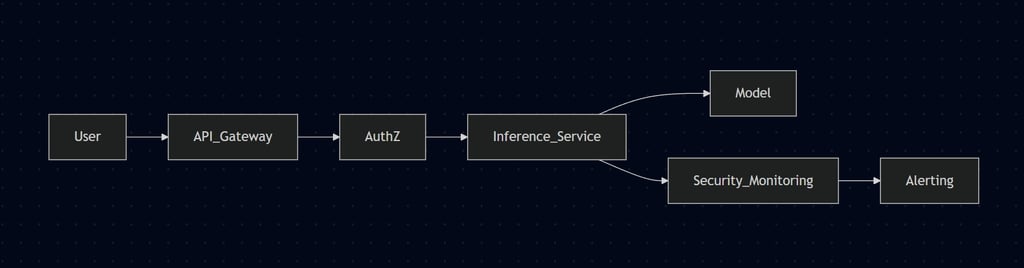
Security is not a layer at the end.
It’s embedded in the request lifecycle.
If you cannot:
Attribute every inference to a tenant
Explain why a model responded the way it did
Detect abnormal usage patterns
You don’t have control—you have hope.
Secure Coding for AI: The Controls That Actually Reduce Risk
1. Treat User Input as an Attack Surface
Not a Feature
Prompt injection is not a model issue.
It’s a coding and boundary problem.
What strong teams do
Validate prompt structure, not just length
Separate system instructions from user content
Enforce hard execution boundaries
If users can influence how the model behaves, not just what it answers—you’ve already lost control.
2. Data Security: Prevent Leaks Before They Become Complaints
Most AI data exposure is accidental, not malicious.
Common failure patterns
Training on mixed customer datasets
Logging prompts for “debugging.”
Reusing embeddings across tenants
Founder rule
If customer data ever crosses tenant boundaries—even indirectly—you need to know exactly where and why.
3. Secure Coding Is About Reducing “Silent Privilege.”
The biggest AI SaaS risk isn’t hackers.
It’s over-trusted internal components.
High-risk patterns
One service account accessing all models
Engineers loading models dynamically in production
Unverified model artifacts
Unsafe deserialization (especially in Python ML stacks)
If a compromised model file can execute code, that’s not “ML risk.” That’s a software supply chain failure.
Visibility: If You Can’t See It, You Can’t Defend It
Security without visibility creates false confidence.
What You Must Be Able to Answer Instantly
Who accessed which model, when, and why?
Which tenant triggered this inference spike?
Which dataset influenced this output?
Can this output be reproduced—and audited?
If the answer is “we’d have to check,” Your exposure window is already open.
Managing Privacy & Customer Complaints (Before Legal Gets Involved)
Privacy issues in AI SaaS don’t arrive as lawsuits.
They arrive as questions.
“Why does the model know this?”
“Is our data being used to train it?”
“Can you delete our data from the model?”
If your team cannot answer confidently:
Your engineers panic
Your support team escalates
Your leadership loses credibility
Good security reduces complaints.
Great security prevents them entirely.
Compliance Is Not the Goal—Trust Is
SOC 2, ISO 27001, GDPR, HIPAA—these frameworks don’t exist to slow you down.
They exist to force visibility, control, and accountability.
AI startups fail audits not because they lack tools, but because:
Controls were implicit
Decisions were undocumented
Risks were assumed, not managed
The Founder Takeaway
AI SaaS security is not about perfection.
It’s about early warning, proactive control, and informed decisions.
If:
Customers detect issues before you do
Complaints reveal blind spots
Security only appears during audits
Then security is already costing you growth.
Soft CTA (Lead-Oriented, Not Salesy)
If you’re building or scaling an AI SaaS and want:
Early visibility into real security risks
Practical secure coding guidance tied to business impact
A calm, vCISO-level review—not tool selling
That’s exactly where we help founders and CTOs.
Security done right doesn’t create noise.
It creates confidence—for you and your customers.